
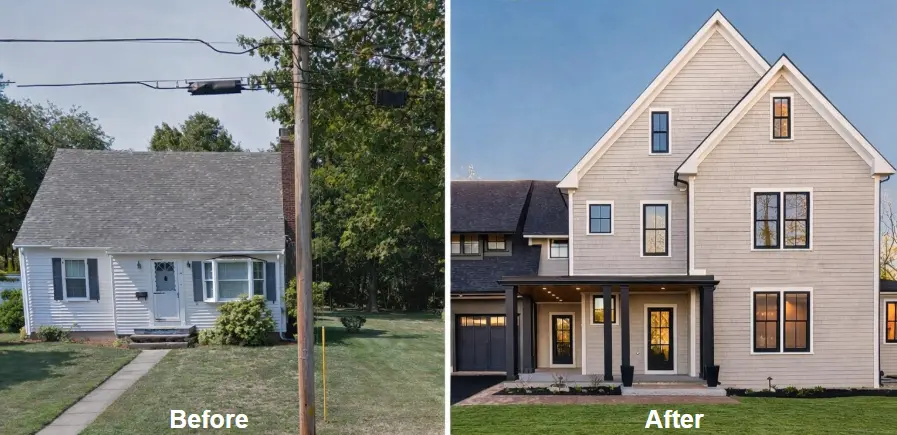
Newburyport is fortunate to be one of the most desirable places to live on the North Shore. But with that desirability has come growing pressure on our housing stock, particularly in the north and west end neighborhoods where we are increasingly seeing modest homes demolished and replaced with much larger luxury houses. Many residents have described this trend as “mansionization,” and it has sparked an important conversation about the future of our neighborhoods and the kind of growth we want to encourage in our city.
This conversation is not about aesthetics. It is about height, scale, and compatibility with existing neighborhoods. Residents are concerned that oversized homes permanently alter the character of streets historically defined by modest capes, ranches, and bungalows. In Ward 6 alone, we have lost nearly a dozen smaller homes to teardown redevelopment in recent years.
To understand why this is happening, we have to start with zoning. Zoning determines what can be built, how large it can be, and how land can be used. In most communities, residential zoning categories are structured so that R1 is the most restrictive, generally allowing only single-family homes on larger lots, while R2 and R3 allow progressively greater density.
In Newburyport, however, more than 60% of the city is zoned R2. In these districts, single-family homes can be built on 10,000-square-foot lots and reach heights of up to 35 feet — effectively allowing three-story homes. Combined with permissive lot coverage and setback requirements, these zoning rules have made many north and west end neighborhoods especially vulnerable to oversized redevelopment projects.
By contrast, most R1 parcels require 20,000-square-foot lots on paper, but many of the existing lots in those districts are smaller than that. Because many of those lots are “nonconforming” to the zoning rules, builders often need special permits to build or significantly expand homes there, making large redevelopment projects more difficult to start and less profitable to complete.
Another important factor is the city’s Demolition Control Overlay District, or DCOD, which provides additional protection against incompatible demolition and reconstruction in large sections of Wards 1, 2, and 3. Many of the neighborhoods currently experiencing the greatest redevelopment pressure fall outside that protected district.
As a result, we are seeing modest homes — often among the more attainable ownership opportunities in Newburyport — replaced with luxury units selling for well over $1 million. Many of the homes being lost sold in the $600,000 to $800,000 range. While still expensive, those homes represented a far more accessible entry point into our community than the houses replacing them.
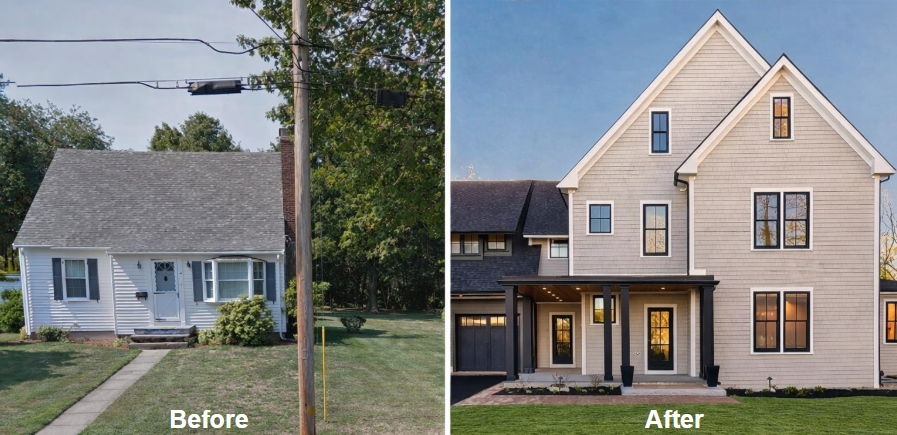
For many residents, the concern is not growth itself, but the kind of growth we are encouraging. We have heard repeatedly from neighbors who would rather see two smaller homes built on a larger lot than one oversized single-family house. That approach would preserve neighborhood scale while also creating more housing opportunities for young families, working residents, and seniors looking to downsize.
That is why we sponsored a zoning amendment intended to better align redevelopment with the values our residents have expressed. Specifically, this proposal creates an alternative set of dimensional requirements that can be judiciously applied to appropriate areas of our city, ensuring that new construction matches the scale of the surrounding neighborhood. By introducing more appropriate standards for residential renovations and rebuilds, we seek to protect our stock of more attainable entry-level homes while promoting more context-sensitive construction. This proposal is not anti-growth, nor is it an attack on property rights or private investment. Rather, it is an effort to guide redevelopment in a way that preserves the more modest character of our neighborhoods while supporting responsible, sustainable growth, and a diversity of home sizes across the city.
We also face a much larger housing challenge. Over the last two decades, state and local housing policy has increasingly focused on creating housing opportunities for more households rather than fewer. In Newburyport, we frequently hear from longtime residents whose children can no longer afford to live here, and from older residents struggling to find smaller housing options within the community they have called home for decades.
The question before us, then, is not whether Newburyport should grow, but how it should grow. Sustainable growth means balancing housing production with neighborhood compatibility, infrastructure capacity, environmental realities, and long-term fiscal sustainability.
At the same time, we recognize that this issue is deeply personal. For some homeowners, redevelopment potential represents an important financial asset or retirement resource. For others, there is real fear about losing the character and scale of the neighborhoods they love. Our challenge is to thoughtfully balance those competing concerns.
Ultimately, we believe we can thread the needle. We can encourage redevelopment that expands housing opportunities without sacrificing what makes our north and west end neighborhoods special. We can support builders and private investment while discouraging oversized homes that diminish the diversity of our housing stock. And we can craft zoning policies that reflect the values of our community: sustainable growth, respect for neighborhood scale, and a commitment to preserving what makes Newburyport special.
This will not be an easy conversation, nor will there be perfect consensus. But it is a conversation worth having. We look forward to continuing to work with residents, builders, architects, brokers, and all stakeholders as we shape policies that allow Newburyport to grow thoughtfully and responsibly for generations to come.