
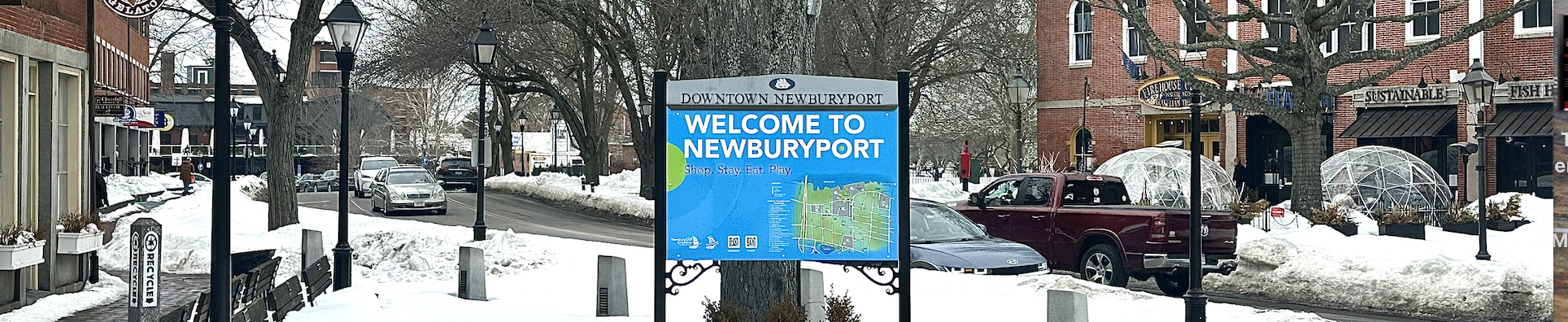
The Townie is an opinion website. The views expressed in this piece belong solely to the author, do not represent those held by The Townie, and should not be interpreted as objective or reported fact.
Tourism is a strange concept to me. When I was young, in the early 70s, I’d never heard of a “tourism industry.” Now, my Facebook is cluttered with two things: articles telling me where to travel, and prescription drug ads for high blood pressure. I don’t have high blood pressure, but Mr. Longfellow says if I keep looking at Facebook, I’m bound to get it. I think he’s right.
I usually ignore the clutter, but when I saw an article about Newburyport in Travel + Leisure, I had to click on it. That’s a pretty big deal…my small town in a big-time magazine! Instantly, I felt like I was reading an obituary written by someone who never knew me.
The cliches were boundless. Did you know our “hidden gem” of a town has a “charming downtown area” and “one-of-a-kind seafood restaurants”? Hotel, restaurant, and activity recommendations were seemingly pulled from Google, with no firsthand color or detail. AI probably needed those blood pressure meds after working so hard on that story, and getting no credit.
Jokes aside, maybe I’m being too harsh on the writer. God knows, everyone in town – from what I saw on Facebook – loved the article, and praised the exposure our city was getting. That got me thinking: we reflexively welcome tourism as a boon to the local economy. A big feature in Travel + Leisure means, somehow, that we’ve made it, like a starlet getting her Hollywood break. But is making it a good thing?
We should always welcome visitors, but there’s a big difference between welcoming visitors and cultivating a full-fledged tourism industry. Building a hotel on the waterfront is based on assumptions that tourism means progress. Downtown shops increasingly cater to the needs of transient visitors rather than full-time residents. Want basic kitchenware or arts and crafts supplies? Go to Seabrook. Want overpriced totes and jewelry stores on every corner? Come to Newburyport. It didn’t happen overnight, but the priorities of our town have gradually shifted – from affordably serving the basic needs of people who live here, to catering to wealthy visitors looking for souvenirs, luxury jewelry, and expensive summer real estate.
This isn’t all tourism’s fault. You can’t blame affluent people for visiting Newburyport and spending money here, or stores for trying to meet their needs. That natural transformation happens when a nice city grows in reputation and public awareness. But here’s my question: do we need to expedite it? I understand that tourism is good for our economy, but is it good for our culture? Does it erode the very character people found so attractive about our town in the first place?
Tourism contorts destinations so they appeal to everyone, with fast food on every corner, and the same souvenir shops selling the same magnets and snow globes. That’s why people avoid Times Square at all costs, and Toulouse feels more authentic than Paris. There’s a reason travelers are always searching for “hidden gems” — because gems exposed to the light lose their luster, become dull, less authentic. Both residents and tourists alike want real experiences.
My gripe with the Travel + Leisure article isn’t that is spotlights our lovely town, but that it does so impersonally and somewhat arbitrarily. It drives people here disingenuously. By doing the bare minimum, it doesn’t serve Newburyport, it serves the bottom line of a publication in New York City. But this is just a symptom of the bigger problem. We celebrate articles like this, despite how they’re written, because we think tourism will make us richer. Well, it might. But it makes us culturally poorer.
We shouldn’t be isolationists, of course. We can’t stick our heads in the sand and ignore the inevitable. But it’s in our best interest to keep this lovely gem of ours hidden.
Daphne Longfellow
Newburyport resident
Passionate about a local issue? We want to hear from you. Check out our submission guidelines.
Subscribe to our Newsletter




Leave a Reply to Marikje Shreeve Cancel reply