
The Townie is an opinion website. The views expressed in this piece belong solely to the author, do not represent those held by The Townie, and should not be interpreted as objective or reported fact.
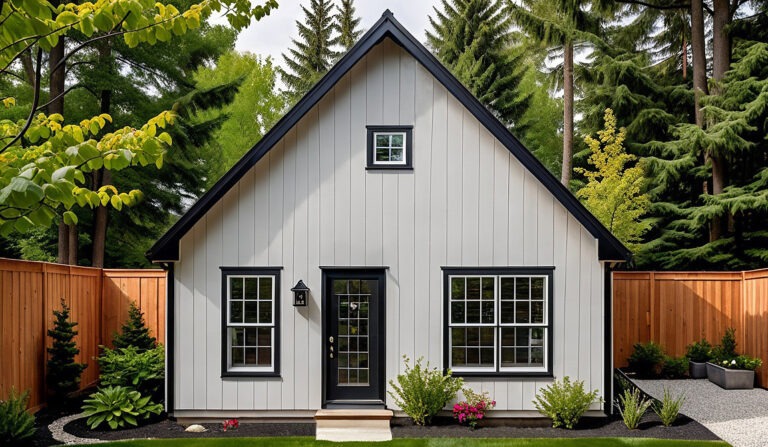
Let’s start with the basics. ADU stands for Auxiliary Dwelling Units. They are nothing new — any second residence on a single family lot is an ADU. Known as in-law apartments or granny flats, some towns have allowed them by right, but if the house is not in a zone that allows for multi-families, in most cases a special permit has been required and subject to planning board approval.
These units have been limited to occupancy by relatives of the homeowner. When the family’s need for it goes away, it has not been legal to rent them out to non-relatives, although with lack of another use, many homeowners have done just that. That leaves the “landlord” with exposed liabilities and exposure to legal issues with the tenant.
Because of the growing housing shortage, many states including Massachusetts and New Hampshire have passed laws allowing any single family homeowner to bypass local zoning laws and create an ADU on their property. No special permit required, and these units can be rented to anyone, but not short term like Airbnb.
ADUs are one of the most effective ways to increase housing availability in town. Building on properties that are already occupied by homes reduces the impact of housing density on our city’s aesthetic, and creates much-needed rental opportunities. This is particularly important nowadays, as rental units–particularly affordable ones–are growing more and more scarce.
Not every site is suitable for an ADU. You do need to respect setbacks from property lines, usually 10 feet. The first step to building at ADU is site evaluation. There are two choices: traditional “stick build” or modular.
If feasible, modular is a great way to go. It is important to know that modular is NOT just an upgrade from mobile homes, it’s a totally different animal. These can be very high quality structures, and often superior to stick build in many ways. Modulars can be any design, they are built in climate-controlled environments, so workers are not in rain, snow, extreme heat or cold. Apartment buildings, commercial structures, and single-family homes are being built this way. They are built so solidly that each module can be lifted onto a truck bed by crane and then assembled on the foundation with a crane. They meet all building code requirements and then some, with great energy efficiency.
They are built while the site is being prepared, so completion time is typically half of stick build, and your property is not a construction site. There is little waste in the construction, so this is the most environmentally sound approach.
Since they require a flatbed truck to deliver them, the truck must have access to the site, and a crane is required to lift the units onto the foundation. Narrow streets, tight turns, and narrow lots make this problematic. The site evaluation will determine the feasibility of this approach.
Stick building is typically more expensive and time consuming. With stick building, the unit can be incorporated into the existing home if that is desired. It may be an addition, it may be converting part of the existing structure such as the basement, the attic or above a garage. Note that these solutions are limiting for senior homes because of accessibility, but can be a ground floor unit attached to the house. It can turn your property into a construction site for as long as six months, and scheduling issues and cost overruns can occur.
During the site evaluation, it typically becomes quickly clear what the best option is for your property and needs,
Costs vary depending on size, site, and other considerations. Modular options are being offered by some big box retailers, but these are not built to code and require major investments to get permitted and be made habitable. The prices are totally unrealistic to get to the finished product, and consumers are generally not prepared for the costs and complications to finish the cheap units.
ADUs aren’t a widely-utilized option right now, but they could be a great solution to our housing shortage problem.
John Wells
Newburyport resident
Passionate about a local issue? We want to hear from you. Check out our submission guidelines.
Subscribe to our Newsletter




Leave a Reply